The healthcare and life sciences industry is undergoing a significant digital transformation. From connected medical devices to intelligent laboratories, organizations are increasingly adopting technologies that improve operational efficiency, data visibility, patient outcomes, and regulatory compliance. Among these technologies, the Internet of Things (IoT) is becoming an important enabler of connected healthcare and smarter laboratory environments.
IoT life sciences services help healthcare providers, pharmaceutical companies, research organizations, and laboratories connect devices, systems, and data to create more intelligent and responsive operations.
How IoT Is Transforming Healthcare and Life Sciences
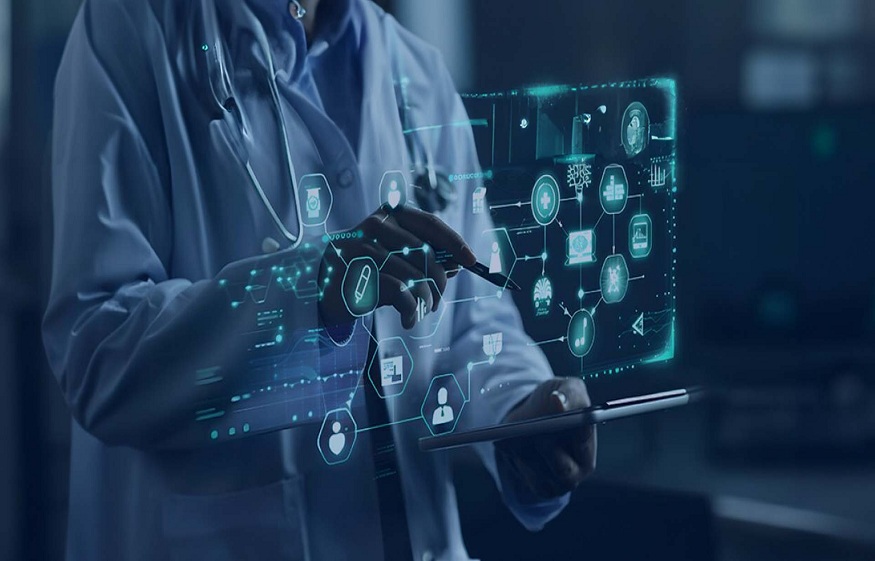
The Healthcare and Life Sciences sector generates enormous amounts of data through medical devices, laboratory equipment, patient monitoring systems, supply chains, and clinical research. IoT enables organizations to collect and analyze this data in real time.
Connected devices can continuously monitor patient conditions, track medical equipment, and provide healthcare professionals with actionable insights. In hospitals, IoT-enabled monitoring can support remote patient observation, asset tracking, and predictive maintenance of critical equipment.
For pharmaceutical and research organizations, connected laboratory equipment can improve data collection, equipment utilization, environmental monitoring, and process visibility. These capabilities can help organizations reduce manual intervention while improving accuracy and operational consistency.
Read More: Databricks Genie for Retail and CPG: Enterprise Use Cases
Building Smarter Laboratories with IoT
Smart laboratories rely on connected equipment and intelligent data management to improve research and testing processes. IoT sensors can monitor temperature, humidity, pressure, equipment performance, and other environmental conditions that are critical to laboratory operations.
With IoT life sciences services, organizations can establish connected laboratory ecosystems where devices communicate with centralized platforms. This creates greater visibility into laboratory activities and enables teams to identify potential issues before they affect experiments, samples, or production processes.
IoT can also support predictive maintenance. Instead of waiting for laboratory equipment to fail, organizations can analyze equipment data to identify unusual patterns and schedule maintenance proactively.
Connecting IoT with Broader Enterprise Technology
The value of IoT extends beyond individual devices. When connected with enterprise applications, analytics, cloud platforms, and automation technologies, IoT data can support broader digital transformation initiatives and help organizations make faster, data-driven decisions.
For hospitals and healthcare providers, integrating connected devices with healthcare IT solutions can improve information flow between medical equipment, patient monitoring systems, and enterprise applications. This connectivity can help healthcare teams access relevant information more efficiently while supporting better operational visibility.
In pharmaceutical manufacturing and life sciences production, IoT can work alongside smart manufacturing solutions to monitor equipment, production processes, and facility operations. Real-time data can help organizations identify operational issues, improve asset utilization, and support more efficient manufacturing workflows.
IoT can also play an important role in smart energy management solutions. Sensors and connected systems can monitor energy consumption across hospitals, laboratories, and manufacturing facilities. Organizations can use these insights to identify areas of excessive consumption, improve resource utilization, and support more sustainable operations.
Beyond operational technologies, organizations can also use Digital Marketing Solutions to strengthen engagement with patients, customers, healthcare professionals, and other stakeholders. When digital engagement is combined with connected technologies and data-driven insights, businesses can create a more integrated digital ecosystem.
The Importance of an Integrated Digital Strategy
Implementing IoT successfully requires more than connecting devices. Organizations need secure architectures, scalable platforms, data integration, analytics capabilities, and effective governance. They also need to consider interoperability, cybersecurity, compliance, and the ability to scale connected environments over time.
Technology partners such as LTM can help organizations approach IoT as part of a broader enterprise transformation strategy. By connecting IoT with cloud, data, applications, automation, and other digital capabilities, organizations can build technology ecosystems designed around measurable business outcomes.
Read More: LLMNR Poisoning: Why Internal Penetration Tests Still Start Here
In addition to IoT and technology modernization, organizations can leverage capabilities such as Digital Marketing Solutions to strengthen digital engagement with patients, customers, partners, and other stakeholders.
The Future of Connected Healthcare and Laboratories
IoT is creating new possibilities for healthcare organizations, pharmaceutical companies, research institutions, and laboratories. As connected devices become more intelligent and data-driven operations become more common, IoT will continue to play an important role in building responsive, efficient, and connected environments.
By adopting IoT life sciences services as part of a comprehensive digital strategy, organizations can move toward smarter healthcare delivery, more connected laboratories, optimized operations, and data-driven decision-making. The combination of IoT, enterprise technology, analytics, and automation can ultimately help the Healthcare and Life Sciences industry build a more connected digital future.